The crab spider: a fragile yet fearsome predator!
Today, I would like to introduce you to a realm of diminutive creatures that often send shivers down our spines, evoking a sense of wonder while occasionally prompting us to flee – the world of spiders. But let’s not focus on just any spider; I’ve chosen to shed light on a particular family – the Thomisidae, more colloquially recognized as crab spiders. These arachnids earn their name from the elongated nature of their two pairs of front legs and their distinctive sideways movement, reminiscent of the renowned crustacean!
One of the most prevalent genera of crab spiders in Europe is the Thomisus genus (pictured below). These spiders are often collectively referred to by their vernacular name ‘thomise’. Consequently, you have the swollen thomise, the lemon thomise, or the dark thomise, all of which are typically individuals belonging to the Thomisus genus. However, these common names can sometimes lead to confusion. Multiple species might be labeled with the same vernacular name, or conversely, a single species might have various names based on different phenotypes (distinct morphological characteristics specific to an individual). This can occasionally complicate matters significantly. For the sake of clarity, I’ll use the term ‘crab spider’, as I find the analogy with crustaceans quite apt.
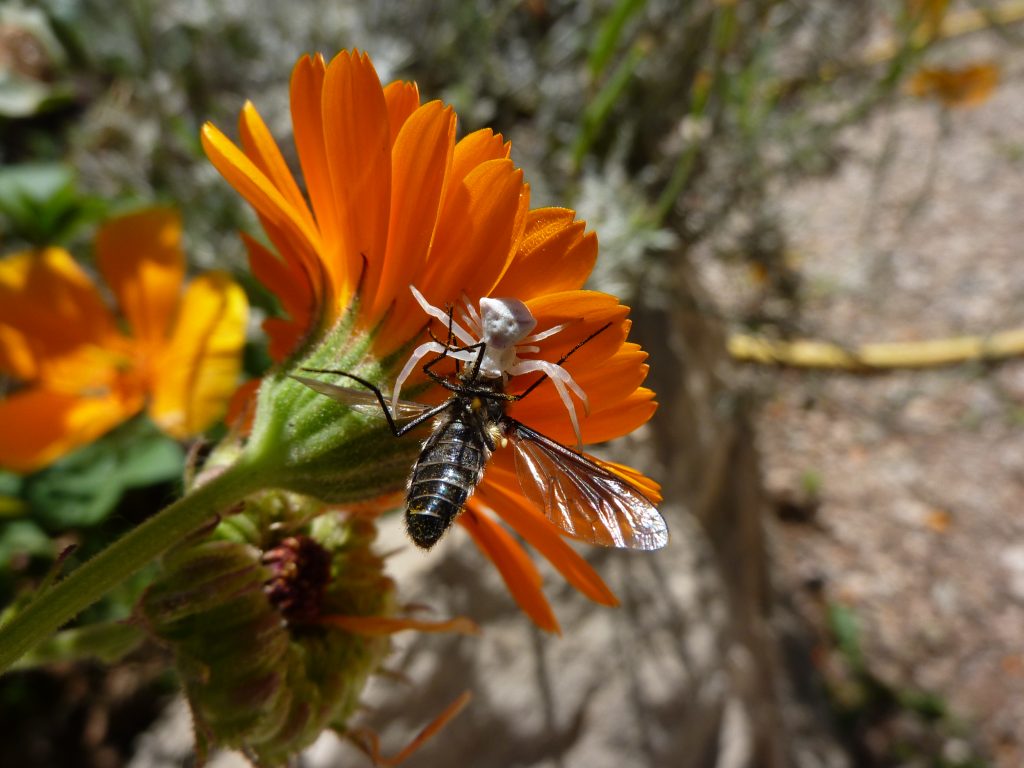
If you’ve reached this point, it’s because you’re eager to delve a bit deeper. Well, the habitat range of this spider family spans across most continents, excluding the poles – it’s just a tad too chilly there for the wasps to fancy! Speaking of wasps, as well as butterflies, bees, and other airborne insects, they all fall victim to the spine-chilling hunting tactics of these crab spiders. Concealed in the shadows, often nestled within the petals of flowers, these spiders lie in wait. When a foraging insect alights, they pounce with remarkable swiftness, securing their prey and satiating their hunger. I’ve observed that certain individuals can remain perched on the same flower for several days, until its vibrancy wanes. They exploit their surroundings to the fullest extent, and some species harbor a subtle trick that elevates their stalking game to a terrifyingly effective level.
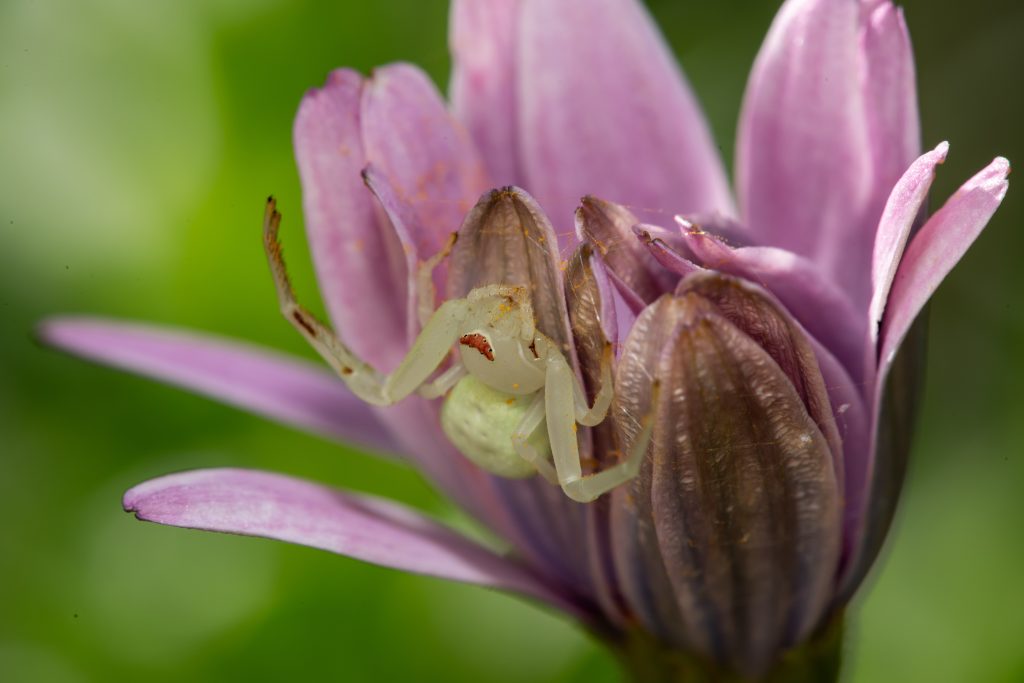
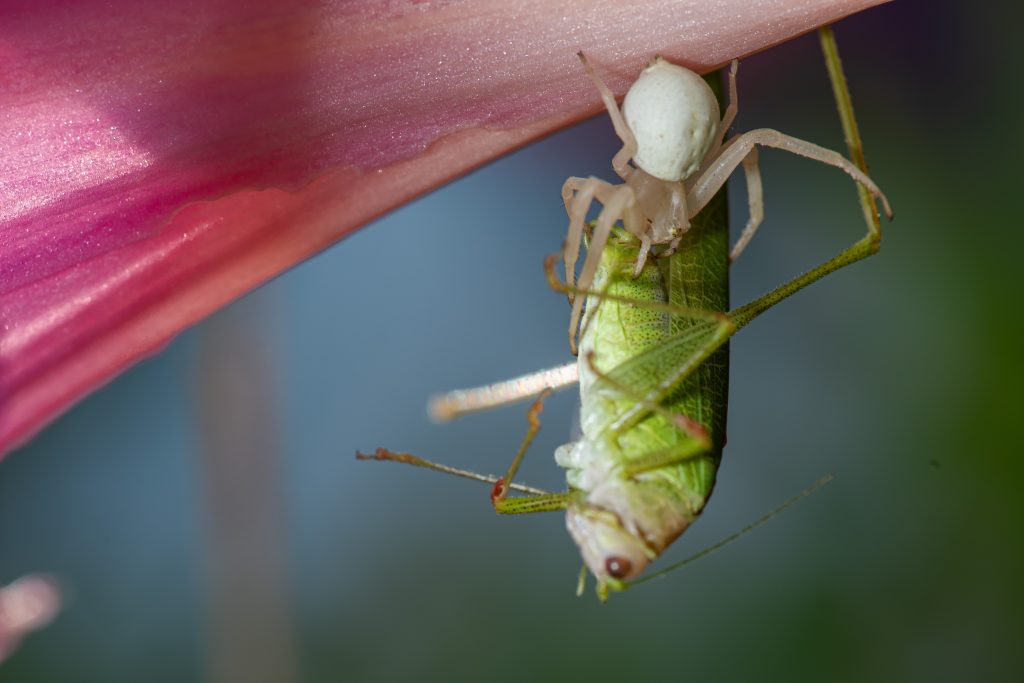
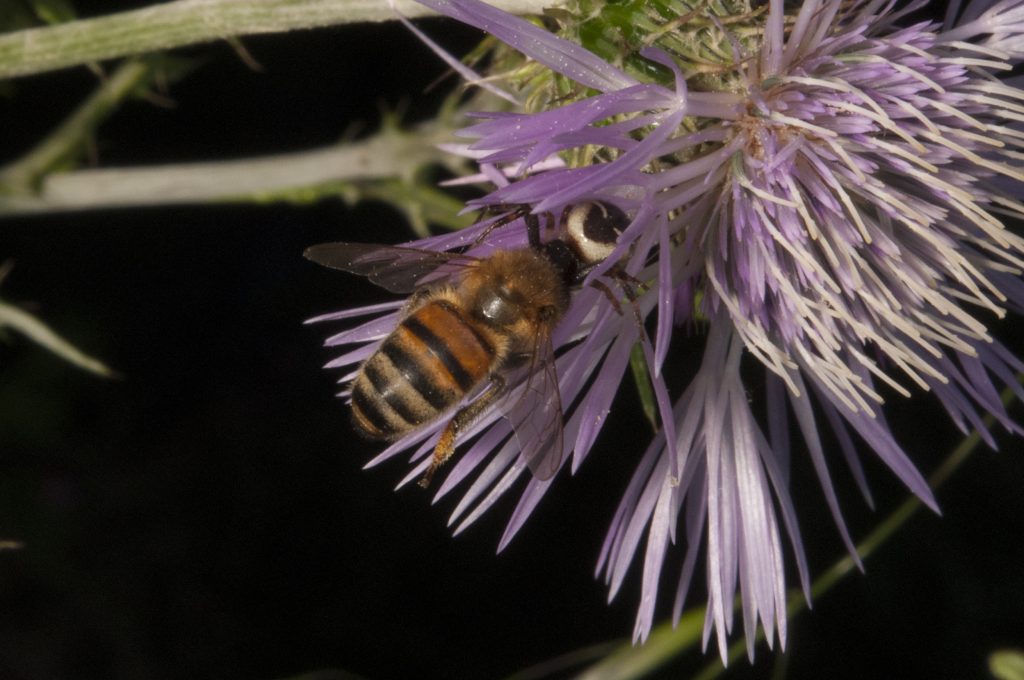

The grand wheel of evolution has bestowed upon them a remarkable camouflage mechanism, thereby facilitating their endeavors. Among the ranks of mature females lies an extraordinary trait – the ability to alter their coloration in response to their surroundings (as depicted in the photo above). This remarkable feature is exclusive to only two genera: Misumena and Thomisus. This incredible adaptive camouflage mechanism, akin to that observed in species such as octopuses, cuttlefish, and chameleons, enables them to seamlessly blend into their environment. This transformative color shift arises from a family of pigments known as ommochromes (visual pigments), spanning hues from yellow to red-violet. These pigments are housed within the peripheral tissues of these spiders. The intricate processes of synthesis and degradation of these pigments facilitate this color-changing ability. While this phenomenon remains intricate and still relatively enigmatic, dedicated research teams are actively working to unravel its complexities, striving for a deeper comprehension.
However, this very camouflage poses a challenge for those curious to observe these tiny beings. Indeed, it doesn’t exactly make them easy to spot! Coaxing them out of hiding requires vigilant scrutiny, for one cannot expect them to simply reveal themselves. To catch a glimpse, one must remain vigilant, scanning environments abundant with foraging insects. These elusive spiders can be stumbled upon in gardens, parks, as well as along roads and rural pathways.
They inhabit the vicinity of houses, thriving in the green enclaves within cities. Unfortunately, they find themselves at odds with the encroachment of urbanization, the curbing of weeds, or any other form of habitat destruction. Despite their role as predators of pollinating insects, they hold a vital place in ecosystems, while also serving as prey for mason wasps and birds. They embody what I term ‘Ordinary Nature’ – the familiar presence that often escapes our notice but undeniably knits us to our surroundings. Recognizing and safeguarding this realm takes on paramount significance for the future. The usage of pesticides and herbicides, particularly by private individuals, stands as a primary driver behind the erosion of this ordinary nature. Thus, let us all stand as vigilant stewards, demonstrating respect for the environment that sustains us!
For further information, sources:
- Riou, M., Christidès, JP. Cryptic Color Change in a Crab Spider (Misumena vatia): Identification and Quantification of Precursors and Ommochrome Pigments by HPLC. J Chem Ecol 36, 412–423 (2010). https://doi.org/10.1007/s10886-010-9765-7
- Godet Laurent, « La « nature ordinaire » dans le monde occidental », L’Espace géographique, 2010/4 (Tome 39), p. 295-308. DOI : 10.3917/eg.394.0295. URL : https://www.cairn.info/revue-espace-geographique-2010-4-page-295.htm